No Y-DNA test kits have been identified as descendants of this David Ross. In fact, no Y-DNA test kits have been identified as belonging to descendants of David's ancestor Fearchar Mac an t-Sagairt, Earl of Ross. The Y-DNA signature of his line remains unknown.
Many American Ross lines attempt to trace their ancestry back to Scotland through Hugh, son of this David Ross. Y-DNA results from descendants of these American Ross lines show that they do not all descend from the same Ross ancestor, therefore, they cannot all be descended from David Ross.
Additionally, no evidence is found that Hugh immigrated to America. His name is found in only one document, a deed of disposition dated 8 March 1707, in which David lists Hugh as his 3rd lawful son.[1] There is no other mention of him before or after David's death. Therefore, it is impossible to prove that he had descendants in America.
David did have a son, Rev. George Ross, who is known to have immigrated to America in the early 1700s. It has been stated in contemporary sources that several of his male lines died out.[2][3][4][5] It may still be possible, though, that there are patrilineal descendants living today. These men would be great candidates for Y-DNA testing with the Ross Surname Project. Identifying the Y-DNA signature of a proven descendant of George Ross could help us determine if other American Ross lines are indeed descended from this David Ross.
Autosomal DNA
David Ross lived recently enough that it might be possible to prove a relationship to him using autosomal DNA tests like AncestryDNA or 23andMe. In order to do this, we would need matching, overlapping segments from people descended from different children. Since we have known, provable, descendant lines of only two of his children, George and Bessie, results would need to come from both of these lines. Unfortunately, since any living person might only be carrying about 12 to 13% of an 8th-great-granparent's DNA, it would be very difficult to find 2 descendants who carry the same segment of DNA inherited from David.[6] This is why it is important that we have as many participants as possible joining the Ross Ancestor Project at GEDmatch. We will only be able to use autosomal results to confirm lineages if we have very large numbers of test results to draw from.
Biography
Loading map...
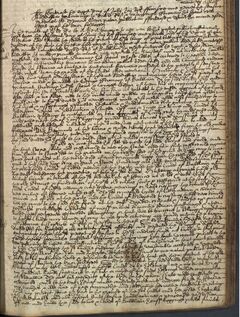
David's 2nd son, the Rev. George Ross, wrote a short autobiography as part of a letter to his son John. Several copies of this letter have been published. One lists his birthplace as the parish of Fearn.
”
George Ross Rector (as he is styled in his Presentation) of the Church of New Castle was the second son, that came to mans Estate, of David Ross of Balblair, a gentlemen of moderate fortune, but of great integrity, and Margaret his wife born in the north of Scotland, and in the Parish of Fern, in the Shire? of Ross, about 4 or 5 miles from the shire between two arms of the sea. The Firth f___tum of Murray (Moray), the other of Dornoch. The land laying between the two firths, terminates in a noted point, called Tarbat Ness.[7][8]
A second copy lists his birthplace as the parish of Tain, near the town of Tain.[9]
The marriage contract between David Ross, notary, and Margaret Stronach, only daughter of George Stronach of Balblair, was dated August 8, 1667.[13]
David's entry in the Register of Admissions of Notaries is dated 26-27 August 1664.[14] It indicates that, at the time, he was a writer in Fortrose. The notarial attestation of the document indicates he was also a cleric in the diocese of Ross-shire. Walter Ross of Balmachy acted as cautioner.
David Ross can be found acting as notary on sasines during the 1670s and 80s.[15][16][17]
We find the first reference to David Ross 'of Balblair' is in the sasine dated 15 June 1681, which also names his wife Margaret Stronach.[18] In this transaction, George Stronach of Balblair granted to David Ross and Margaret Stronach the Easter Oxgait of Balblair. This is how Balblair in Fearn Parish came to be property of this Ross family.
In a list of heretors, wadsetters, and liferenters within the shire of Ross that is dated sometime around 1690, but may be earlier, Tarbet Parish includes George Stronach of Balblair, Jon Stronach, and David Ross notary public.[19] The area that became the parish of Fearn had been included in Tarbat Parish until 1628.[20] It's not clear why they would still be listed there 60 years later. It is important to note that David is designated again as Notary Public and it is his father-in-law George Stronach who is referred to as 'of Balblair'.
David Ross of Balblair is found again at the end of 1699 making payment for the vicarage of the parishes of Fearn and Tarbatt, for the years 1696, 1697 and 1698, and for supply of the vacant Church of Tarbat for 19 Sabbath days from October 7, 1698 to April 9, 1699.[21][22]
David Ross had several dealings with Alexander Ross 5th of Easterfearne. On April 23, 1692, Alexander made a heritable bond to him.[24] On August 22, 1693, David Ross had sasine of the lands of the Summerwell quarter of Meikle Allan following on that heritable bond.[24] Meikle Allan was a neighbor to Balblair in Fearn. Meikle Allan and Little Allan formed a single unit of the two davochs of Allan. Meikle Allan was comprised of the west quarter of Wester Allan and the eastern three-quarters of Knocks or the Hill quarter, the south or Summerwell quarter, and the Clay quarter.[25] Alexander can be found in transactions pertaining to several different quarters of Meikle Allan. On 12 July 1692, Rorie Fuller disponed to Alexander the quarter lands of the easter three quarters of Meikle Allan, called the Summerwell quarter.[26] It was David Ross, however, who had sasine of the lands the next year.[27]
Meikle Allan belonged, in the 1560s, to the Bishop of Ross. In 1569, James VI granted to Andrew Munro of Newmore the escheat of all the goods upon the quarter lands of Meikle Allan that were forfeited by John Leslie, Bishop of Ross, for treason.[28] The lands were passed down through this Monro line.
On 31 March 1692, John Munro, late heritor of the wester quarter of the davoch lands of Meikle Allan, gave consent for Mr. David Polson of Kinmylies to dispone to Alexander Ross of Easterferne, the wester quarter of Meikle Allan.[29] The next day, a contract of wadset was made between John Monro and Alexander Ross of Easterferne whereby John Monro disponed to Alexander the wester quarter of the davoch lands of Meikle Allan.[30]
Several years later, dated 29 January 1695, we have a marriage contract between Joseph Munro, sometime of Wester Allan, brother of John Monro, and David Ross of Balblair and Bessie Ross, his second daughter.[31]
Alexander Ross of Easterfearn comes up again in a disposition dated 28 January 1710.[32] It refers to another bond, dated 23 April 1704, by the deceased Alexander Ross of Easterfearn to the deceased David Ross. Both men, therefore, were dead by the date of the disposition in 1710.
David of Balblair and Alexander of Easterfearn were 7th cousins 4 times removed on their paternal lines. It's possible they were more closely related on maternal lines, but David's mother is not known.
In 1889, Francis Nevile Reid published his section on the Branch of Balblair in Northern Notes & Queries.[33] He stated that David of Balblair was the son of Andrew, younger son of George Ross, fifth of Balmachy. He points to two sasines for which Andrew acts as witness, one of them referring to him as 'Andrew, son of deceased George'.[34] He gives no sources, though, for David's relationship to Andrew. He does mention a letter written in 1764 that describes Ross of Balblair as 'Cadit of the decayed house of Balmachy.' This would seemingly confirm David's descent from George 5th of Balmachy.
Harmon Pumpelly Read repeated Reid's information in Rossiana, published 18 years later.[35] He does not provide any additional sources confirming that David was the son of Andrew. He did, however, include a copy of the letter written in 1764 in which Hugh Ross of Shandwick informs David's grandson, John Ross of Philadelphia, that his line was 'cadet of a decayed house of Balamuchy'.[36]
This statement was the result of an inquiry made by John a year and a half earlier. In an effort to determine his relationship to Rosses in London, John forwarded 'an extract of my father's own account sent me of his birth and parentage' that eventually made its way to Hugh of Shandwick.[37] It's probable that this 'account' came from the autobiography that Rev. George sent John in 1752. In it, George says that he was the son of David Ross of Balblair, but he gives no information about the generations prior to David.[9]
Mr. Hugh Ross's father-in-law was Alexander Ross, of Daan House, near Balblair, Ross-shire. He was a writer to the Signet in Edinburgh, admitted 1718, and knew thoroughly the origin of the Rosses of Balblair.[38]
Daan House was near Balblair, parish of Edderton, not Balblair, the home of David Ross of Balblair, in the parish of Fearn. There seems to have been some confusion by the time Harmon was publishing his book in 1908 between the Rosses of Balblair in Fearn and a newer Ross family in Edderton who had come to refer to themselves as Ross of Balblair. These two estates of Balblair were very near each other, though, and since Alexander of Daan House lived during the time of David Ross of Balblair, there's no reason to think that wouldn't be familiar with the lairds of Balblair, Fearn.
In Hugh of Shandwick's response to John in Philadelphia, which includes this statement regarding the decayed house of Balmuchy, he informs John that he knew personally his uncle Andrew, who was long since dead.[36] He also says, "as I find your ho. of Balblair is from mine of Shandwick I hand you a acct yrof herewt not inferior to any extant as your worthy fayr truly tells you."
The account that he included with the letter was a pedigree prepared by someone he refers to as the 'historiographer of Scotland'. This is what is now referred to as the The Crawford tree, prepared in 1729 by George Crawfurd. It is a complete account of Hugh of Shandwick's descent from Fearchar Mac an t-Sagairt Earl of Ross, but it does not include the house of Balblair.
The letter itself, not the enclosed pedigree, is the only evidence we have connecting David of Balblair back to Fearchar Mac an t-Sagairt, Earl of Ross. More evidence is needed to confirm this line. David's mother's line is unknown.
The marriage contract of David Ross and Margaret Stronach, daughter of George Stronach of Balblair, is dated 8 August 1667.[13] We find in records evidence of 5 children, 3 sons and 2 daughters. One of these lines, that of Rev. George Ross, is known to have migrated to America.
In the deed of disposition written on 8 March 1707, David dispones Balblair to his grandson Andrew, and the heirs male of his body whom failing to the other heirs male of Andrew, whom failing to the Rev. George Ross and the heirs male of his body, whom failing to Hugh Ross third lawful son of the said David and the heirs male of his body.[12][11]
David's eldest son Andrew was served as heir on 14 January 1710 and we find him acting in in transactions related to the estate after this point.[39][32][10][40]
What we know of David's daughters comes from the marriage contract dated January 29, 1695, between Joseph Munro of Wester Allan and David Ross of Balblair and Bessie Ross, his second daughter.[31]Rossiana mentions a daughter, Elizabeth, but this appears to be an error from Burke's 1879 edition of Landed Gentry that was copied by Francis Nevile Reid.
We know that "David Ross, of Balblair, was dead before the 14th of January, 1710, the date of the general service of his son, Andrew of Balblair, to him."[39][11] After his death, several claims were made on the estate to compensate for debts owed. Balblair was eventually transferred on 22 August 1733 from John Cruickshank, a merchant in London, to David's distant cousin William of Shandwick.
David's son Andrew died before 30 May 1723.[41] David's daughter, Bessie, lived until September of 1756.[42] George was the only child known to have migrated to America.[43] He was the progenitor of several American Ross lines. Hugh disappears from records after the disposition of 8 March 1707.[12] There is no evidence of a marriage or children.
Timeline
Timeline entries retain the wording of the original documents. They may not specify a parish when speaking about Balblair. Documents pertaining to David Ross of Balblair are referring to Balblair in Fearn Parish.
26 August 1664 - King Charles, the President and remaining Lords of Session, who being informed of the literature, qualification and education of ‘our lovitt Dauid Roswrytter in Fortross’ and that he is able and qualified to use and exercise the office of an public notary to our lieges if he were admitted thereto, therefore they require the examiners to take trial of his literature, qualifications and good education for the using and exercising of the said office of notary. After trial taken of him by the said lords examiners, they understanding him to be qualified, have admitted him and he takes the oath that he will really and truly administer the office according to the acts of parliament. Walter Ros of Ballamukie stands cautioner and he jointly with David Ross gives indemnity to refund anyone whose appeal to the Lords is successful.[14]
8 August 1667 - At Balblair, it is contracted between David Ros, notary public, on the first part and George Stronach of Balblair for himself and on behalf of Margaret Stronach, his only lawful daughter, and Margaret Stronach herself, on the other part. David Ross and Margaret Stronach have agreed to marry properly (in the face of God) by 31 December 1667, under penalty of £100 Scots payable by either party to the other party in case of failzie. George Stronach for himself and on behalf of Micheal Stronach, his eldest lawful son and heir, as cautioner and debtor, to be bound and obliged, along with his heirs, executors etc, to pay to David Ross, his heirs, executors etc, in dowery £400 Scots, £200 of which by Martinmas 1668 and £200 by Martinmas 1669.[13]
29 October 1673 - Instrument of Sasine following on an assignation and obligation dated at Inverness, 13th March 1671. Witnesses, Colin Ros and Hector Hectorson, 'fermorers' of said mills and indwellers in Fearn, Alexander Ros there, and William Gair in Meikle Rany. Notary, David Ros, of Ross diocese. Sasine given to the said Robert Barbour on 29th October, and recorded 8th November, 1673, in the general register.[44]
23 December 1674 - Instrument of Sasine in terms of a disposition (dated at Inverness, 12th December 1674) by John Polson Robertson, merchant, burgess of Inverness, assignee and cessioner of John Polson of Merkinshe, in favour of Robert Barbour, dean of guild, Inverness, of the two mills of Ferne, mill-crofts, multures, etc., lying in the abbacy of Ferne and sheriffdom of Ross. Sasine given by Andrew Fraser in Ferne, bailie, to Colin Ros, 'multerer' in Ferne, on behalf of grantee and recorded at Fortrose 29th, December 1674. Witnesses, Hector Hectorson, 'multerer' in Ferne, William M'Finlay in Balblair, Donald Sutherland and Donald Denune, millers in Ferne. Notary, David Ros, of the diocese of Ross.[45]
23 June 1675 - Instrument of Sasine following on a precept (directed to Walter Ros Davidson in Ferne, as bailie) in a disposition, dated at Rosmarkie, 28th May 1675, by Donald Mackenzie in Langcoats conveying to him the lands of Mulderg, Balnashirach, and mills of Ferne, the lands of Balconie, Brigend, Kilncroft, and other crofts named, in the parishes of Fearn and Kiltearn and sheriffdom of Ross. Sasine given to Hector Hectorson, multerer of the mills of Ferne, as attorney for grantee, 23rd, and recorded at Fortrose 25th, June 1675. Witnesses, George Stronach, smith in Ferne, William M'Walter, ‘teugter’ there, Alexander Stronach, Donald Sutherland, miller, William Denune, miller, and Walter Sutherland, all in Ferne. David Ros, of the diocese of Ross, notary public.[46]
28 June 1675 - Instrument of Sasine given to Alexander McIntosch, in Contulich, as attorney for Isobella Graham, spouse of Lachlan McIntosch of Kinrara, of the liferent of the towns and lands of Upper and Nether Contulich, and the pendicle of Ardach, with the mill and mill lands of Contulich, in the barony of Foullis, proceeding on a precept in a charter of the same date granted by said Lachlan McIntosche. Witnesses to charter include David Ros, notary public. Notary to sasine, said David Ros.[15]
15 June 1681 - Andrew Fraser in Fearne appointed as bailie by George Stronach of Balblair, to deliver a precept of sasine to a notary public for registration. The precept of sasine granted to David Ross and Margaret Stronach, and the longest living of them, in conjunct fie and liferent, the Easter Oxgait of Balblair, consisting of the toun of Balblair, extending to one quarter or two oxgaits of land, with the alehouse, alehouse croft, houses buildings, yards, kilns, bars, byres etc. After their deaths, the right would pass to the heirs male begotten between David Ross and Margaret Stronach, failing which to David Ross’s nearest male heirs, failing which to his heirs and assignees, without reversion, regress or redemption. Written by Donald Simsone, writer in Tayne. Witnesses: Master John McKenzie of Inverlaell; Alexander Ross, Commissar Depute of Ross; Andrew Fraser in Fearne; Alexander Ross, servant to David Ross.[18]
8 July 1681 - David Ross & Margaret Stronach sasine dated 8 July 1681.At Fortrose, sasine registered for David Ross and Margaret Stronach, his spouse, produced by Thomas Gair, notary public, recording that on 15 June 1681, in the presence of a notary pubic and witnesses, David Ross of Balblair was granted right and disposition, for himself and as attorney for Margaret Stronach, in conjunct fie and liferent, the Easter Oxgait of Balblair[18]
4 April 1687 - Instrument of Sasine in favour of John Monro, portioner of Culcairne, and Elizabeth Bayne, relict of Andrew Monro, sometime portioner of Culcairne, of the lands of Knockankirin, in the parish of Kiltearne. Notary, David Ross.[17]
1695 - Bear rent of the Bishopric of Ross. Minister of Fearn's locality. David Ross, Notar, pays him for Balblair 4 Bls. 0 fir. 0 pks[50]
1695 - Bear rent of the Bishopric of Ross, which includes the victual and meal ordinarily paid in bear. Ross — David Ross, Nottar, pays for a quarter of the Drums of Fearn, sometime pertaining to Alex. Forester 6 Bls. 0 fir. 0 pks[51]
17 January 1695 - Precept in disposition, dated at Balblair, by Hector Douglas, late of Muldearg, heir served and retoured to his uncle, the deceased Hector Douglas, some time of Muldearg, in favour of Mr. James M'Culloch of Pilton, of the ile or burial-place belonging to the granter and his uncle, adjacent to the kirk of Fearn, commonly called the Douglas Ile, with the whole fabric of stone, windows, locks, doors, etc., in the parish of Fearn and shire of Ross, reserving to the said Hector, his wife and children, liberty of burial there, under the conditions narrated in the disposition. Witnesses to disposition, William Ros of Aldie, David Ros, notary public, and George Ros, his lawful son.[52]
9 September 1695 - Instrument of Sasine following on a precept in a disposition (dated at Balblair, 17th January 1695) by Hector Douglas, late of Muldearg in favour of Mr. James M'Culloch of Pilton, of the ile or burial-place belonging to the granter and his uncle, adjacent to the kirk of Fearn, commonly called the Douglas Ile. Sasine given by George Hucheon in Ferne, bailie, to Donald Ross in Mulderg on behalf of grantee, 31st August, and recorded at Fortrose 9th September, 1695. Witnesses, Alexander Ross in Sandveik, late commissary-depute of Ross, George Stronach, smith in Fearne, Donald Ross alias Tailzeor there, John Morisoun in Mulderg, and Hugh Ross, writer at Fearne. Notary, David Ross, of Ross diocese.[52]
30 October 1699 - Receipt by Hector Monro of Drumond Collector appointed for collecting and receiving what is due by law to the Ministers and Probationers who supply the vacant churches within the shire of Ross, to David Ross of Belblair in name of the Viscount of Tarbat for 380 merks scots as payment for supply of the vacant Church of Tarbat for 19 Sabbath days from 7 October 1698 to 9 April 1699. also 38 merks to himself as collector foresaid[21]
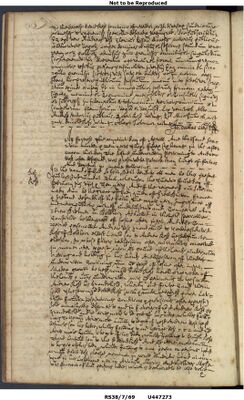
8 March 1707 - David RossdisponedBalblair, reserving a liferent to himself and his wife, to his grandson Andrew (son of his own eldest son Andrew), and the heirs male of his body whom failing to the other heirs male of Andrew, whom failing to the Rev. George Ross and the heirs male of his body, whom failing to Hugh Ross third lawful son of the said David and the heirs male of his body[1]
1709 - Decreet obtained before the Lords of Councill & SEssions at the Instance of George McLeod Some to the said Deceased Alexander McLeod & his tutors agr the David Ross of Balblair the said Andrewes father proceeding upon the said Davids promise to pay & relieve the said Alexander McLeod & his sone & dr of the half of the above debt contained in his sones back bond[41]
14 January 1710 - David Ross of Balblair, father of Andrew Ross, now of Balblair, dies in peace and good health. The Queen and that the said Andrew Ross is the heir and heir of the said David Ross of his father and that he is legitimately heir.[39]
28 January 1710 - Disposition and Assignation by Andrew Ross of Balblair, as heir of the deceased David Ross of Balblair, his father, in favour of John Watson, merchant in Edinburgh, sometime bailie of Leith, of the sum of 1000 merks of principal and annualrent thereof in bond, dated 23 April 1704, by the deceased Alexander Ross of Easterfearn to the said deceased David Ross, and the Summerwell Quarter of the lands of Meikle Allan[32]
28 February 1728 - Extract Decreet of Constitution at the instance of Evan Baillie, writer in Inverness, against Andrew Ross, eldest son of the deceased Andrew Ross, who was eldest son of the deceased David Ross of Ballblair, as heir of line and provision to the said deceased David Ross, his grandfather, decerning said Andrew Ross to enter heir to his said grandfather, and make payment of 650 merks contained in marriage contract between Joseph Munro and Bessie Ross and later Assignation by Alexander Stronach, her current husband[40]
Research Notes
There appear to be several copies of the original manuscript, Cronicle of the Earlis of Ross, still in existence. Some copies include genealogies beyond that of Balnagown that Baillie published in his Cronicle of the Earlis of Ross in 1850. These should be consulted to determine if they include the line from Balmachy to Balblair.
In a letter published in Rossiana dated January 3, 1873, Mr. Stodart told General Read that David must've been "dead 21 February, 1710, when his widow had sosine of the lands."[11] This sasine should be ordered from ScotlandsPeople.
Common discrepancies
2nd of Balblair
The first sentence in the section of Rossiana pertaining to the Branch of Balblair states that, "Balblair in 1666 belonged to James Dallas of Balblair, and Grissel Ross, his spouse."[35] It then goes on to list Andrew Ross as 1st of Balblair and his son David as 2nd of Balblair.
This is in error. The Balblair that belonged to James Dallas for just over a month in 1666 was not the same Balblair owned by David Ross.
We find on 31 March 1666, the sasine given to James Dallas in Ballacherrie on a contract by Sir John Urquhart of Cromarty, dated at Cromarty 6th October 1665, whereby he disponed to him the lands of Easter Balblair, commonly called Kirkmichaell and Balblair.[54]
This Balblair, referred to often as Easter Balblair, was the Balblair in Cromartyshire, which was found just across Cromarty Firth, on the Black Isle. Historically, it belonged to the Urquhart family, but this sasine in 1666 marked its transfer to this Dallas family who then owned it through the end of the 17th century.
This statement in Rossiana about Balblair in 1666, therefore, has nothing to do with the Ross family who were lairds of Balblair in the parish of Fearn.
In David Ross's marriage contract dated 8 August 1667, his father-in-law is referred to as George Stronach of Balblair.[13] On 15 June 1681, George Stronach of Balblair granted to David Ross and Margaret Stronach the Easter Oxgait of Balblair.[18]. David was, therefore, the first of this Ross family to be laird of Balblair, parish of Fearn.
Grissel Ross, wife of James Dallas of Kirkmichaell and Balblair, and Andrew Ross, father of David Ross, 1st of Balblair, were siblings. Both children of George Ross, 5th of Balmuchy, if Rossiana is correct about Andrew's paternity.[55][35] This might have contributed to the confusion between the two Balblairs.
Francis Nevile Reid was the original author of these genealogical tables that were later included in Rossiana. In his version, Francis states only that Andrew very probably became 1st of Balblair.[33] It must have been Harmon Pumpelly Read, during his incorporation of Reid's work into Rossiana, who decided to refer to Andrew definitively as 1st of Balblair. Whether he had additional source material to go on, or whether he just decided to take the leap, is unknown.
Marriage date
In David's entry in Rossiana, we find mention of his wife Margaret Stronach.
David, second of Balblair, parish of Fearn, "notary" (Sasine 15th April. 1678), married Margaret Stronach, "his spouse" (Sasine 8th July, 1681), "relict" (13th April, 1710).[35]
This sasine dated 8 July 1681, in which Margaret is listed as his spouse, has led to many trees giving this date as their marriage date. This may have begun as "before 8 July 1681", with the "before" being stripped out by Ancestry.com during the importing of GEDCOMs, but we can't know for sure.
Either way, this is not a marriage date. This sasine of 8 July 1681, was simply ratifying the precept of sasine dated 15 June 1681, in which David Ross of Balblair was granted right and disposition by George Stronach of Balblair, for himself and as attorney for Margaret Stronach, in conjunct fie and liferent, the Easter Oxgait of Balblair.[13] This was a land transaction. The marriage contract of David and Margaret is dated 8 August 1667 and required them to marry before 31 December 1667.[13]
Captain David Ross
In some trees on the internet, David is referred to as Captain David Ross. This appears to come from The History of the Munros of Fowlis, which states,
VI. Joseph Monro, so named after one of his mother's relatives in Ireland. He was in constant financial trouble, consequent on the debt inherited by him from his brother along with the estate, and which he was not able to pay off. He married Elizabeth, only child of Captain David Ross of Balblair, parish of Edderton, with issue[56]
In reality, there were two David Rosses, David Ross, Laird of Balblair, parish of Fearn, and Captain David Ross of Daan, parish of Edderton. Very near Daan House in Edderton was another property named Balblair. This property was, at the time, within the bounds of the Balnagown Estate.[57]
In 1790, the Balblair Distillery was established at the Balblair in Edderton by a local man, John Ross.[58] This family, during the time that these family histories were being published in the late 1800s, early 1900s, were styling themselves 'Ross of Balblair'.[57]
Both David of Balblair, Fearn, and Capt. David Ross of Edderton, were invited to the funeral of Hugh Munro of Teaninich in 1703.[59] They were also both associated with Meikle Allan, parish of Fearn. In 1693, David Ross of Balblair had possession of the Summerwell quarter of Meikle Allan.[24] In 1726, over a decade after the death of David of Balblair, Captain David Ross of Daan had possession of both Meikle Allan and Wester Allan, also called Ballinroich.[60] It's easy to see, then, how these two men could have been confused.
Lord David Ross
In many trees on the internet, this David Ross and his wife Margaret Stronach are referred to as Lord and Lady. In the most informal sense of the word, they could've been considered lord and lady of the manor. In Scotland, however, the word used for the owner of an estate was laird.[61] This was not an official title of the Peerage.
In Scotland, the title 'Lord' referred to a 'Lord of Parliament', the lowest rank of Scottish peerage.[62] This was the equivalent of the English title 'Baron'.
David Ross owned the small estate of Balblair. This was not a barony recognized by the Lord Lyon. David, therefore, should not be addressed as Lord.
Daughter Elizabeth
When Francis Nevile Reid originally published his genealogy of the 'Branch of Balblair' in 1889, it included on daughter, Elizabeth.[63]
Elizabeth, married David Munro, sixth of Allan, and had a son David, W. S., Edinburgh who in 1765 left his estate to his nephew Charles, son of Margaret Munro and Charles M'Kenzie, who assumed the name of Munro.[64]
This information appears to have come directly from Burke's Landed Gentry. In 1879, he published the first edition that included the Monro of Allan family. It said only, "DAVID MONRO, who m. Elizabeth Ross, dau. of the Laird of Balblair."[65] Unfortunately, this is one of many errors in this lineage provided by Burke.
What we know from records cataloged by the National Records of Scotland is that David's 2nd daughter Bessie married Joseph Monro.[31] Joseph was the brother of John Monro, last of this line of Monro lairds of Allan. Joseph did have lease of the portion of Wester Allan, but was evicted by Ross of Easterfearn who obtained the land as collateral for an unpaid bond. Joseph and Bessie were the parents of David Monro, Writer to the Signet, who eventually purchased Allan back from the heirs of Ross Easterfearn.
There was no such person as David Munro, 6th of Allan, and no evidence that David of Balblair had a daughter named Elizabeth.
Morrow, Josiah (1882). The History of Warren County, Ohio, Containing a History of the County: Its Townships, Towns, Schools, Churches, Etc. ; General and Local Statistics ; Portraits of Early Settlers and Prominent Men ; History of the Northwest Territory ; History of Ohio ; Map of Warren County ; Constitution of the United States. Chicago: W.H. Beers.
It is admittedly impossible that we have been able to evaluate every piece of evidence available for every person included on this site. What you often find on the internet, though, are trees with no sources attached at all. Many of these trees were created pre-internet & have been passed down, uploaded & copied to multiple sites without details of the original sources they were based on. Now, with the advent of DNA testing, we're finding that they don't always match up with what the DNA is telling us. In order to reevaluate these trees in conjunction with the DNA evidence, we need to have available the sources that they might've originally been based on. This site, then, is intended as a repository for these sources and an opportunity to share what the DNA is telling us so that we can work collectively to correct these trees. Over time, more of the old records will be able to be combed through, and the sources cited here will grow.